
Today's AI intelligence, synthesized for you
Major developments in AI today are headlined by OpenAI and NVIDIA’s landmark partnership to deploy massive data center capacity, alongside intensifying competition in the AI chip market as Qualcomm expands into the data center space. In software, researchers are making significant strides in reliability and efficiency, with new techniques like sparse activation distillation and model-first reasoning boosting performance while curbing hallucinations. Meanwhile, the industrial sector is seeing a surge in AIoT integration, and the cybersecurity landscape is pivoting toward autonomous, agentic AI solutions to manage rising digital threats.
Model-First Reasoning for Reducing Hallucinations
A new study on 'Model-First Reasoning' introduced a framework that explicitly structures problems before generation, significantly reducing hallucinations in LLM agents and enhancing reliability for high-stakes planning tasks.
Massive investments from major players like OpenAI and NVIDIA are driving the rapid expansion and scaling of global AI data center capabilities.
The integration of autonomous agentic AI in security operations is becoming the primary method for addressing surging cyber threats and complex detection requirements.
The convergence of AI and IoT is shifting toward intelligent connectivity, enabling more efficient and automated operational workflows across enterprise environments.
Model-First Reasoning for Reducing Hallucinations
A new study on 'Model-First Reasoning' introduced a framework that explicitly structures problems before generation, significantly reducing hallucinations in LLM agents and enhancing reliability for high-stakes planning tasks.

Sparse Activation Distillation for Efficient Training
Researchers at Stanford AI Lab introduced 'Sparse Activation Distillation,' a method that uses a larger teacher model to train smaller student models while using up to 80% less compute, democratizing AI foundation model development.


DeepSeek-R1: Advancing Reasoning with Reinforcement Learning
DeepSeek-R1 emerged as a pivotal 2025 breakthrough, demonstrating how reinforcement learning can significantly boost the reasoning capabilities of large language models, making open-source models highly competitive with proprietary systems.

Honeywell Unveils AI-Powered Building Management Solution
Honeywell launched 'Connected Solutions,' an AI-powered platform designed to integrate disparate building software and technologies into a single interface, aiming to reduce the complexity and costs associated with managing modern smart buildings.
3 Non-Negotiables for Effective AI Adoption in Building Management
Experts emphasize that facility managers must distinguish between true AI and basic automation to avoid the 'automation trap,' highlighting the need for proper data management and AI literacy to successfully streamline building operations.
Reframing Building Management Systems Where Edge and Cloud Act in Unison
Modern building management is evolving to pair edge computing with cloud resources, ensuring that core building functions remain operational even during connectivity losses while leveraging advanced AI for system-wide efficiency.
New Research on Smart Building Trends & Technology Adoption
A 2025 industry survey reveals that 91% of commercial buildings now utilize smart systems, with a significant shift toward data-driven optimization, cloud-based management, and practical AI applications to improve operational efficiency.
Qualcomm Enters AI Chip Market as Rival to Nvidia and AMD
Qualcomm has launched a new line of processors specifically designed for data center AI, marking a significant expansion beyond its mobile-chip roots. The move aims to provide enterprises with more options for scaling AI infrastructure and increasing cost-efficiency in the competitive chip market.

Strong Momentum Expected for Data Center AI Chip Packaging in 2025-2030
Market analysis indicates strong growth for AI chip packaging through 2030, with high demand for application-specific chips and mid-range GPUs using GDDR DRAM. While high-end GPU shipment growth may stabilize, revenue from advanced packaging and interconnect-related chips like NVSwitch ICs is expected to remain a key driver for the industry.
NVIDIA and Partners Build America’s AI Infrastructure
NVIDIA is collaborating with major system makers including Cisco, Dell, HPE, and Supermicro to develop modular AI infrastructure. This initiative aims to integrate NVIDIA GPUs and software into factories to power the next industrial revolution and support large-scale scientific research.
OpenAI and NVIDIA Announce Strategic Partnership to Deploy 10 Gigawatts of NVIDIA Systems
OpenAI and NVIDIA have entered a landmark strategic partnership to deploy at least 10 gigawatts of AI data center capacity, utilizing millions of NVIDIA GPUs to power next-generation AI infrastructure. NVIDIA intends to invest up to $100 billion in OpenAI as these systems are deployed, with the first phase expected to launch in late 2026.
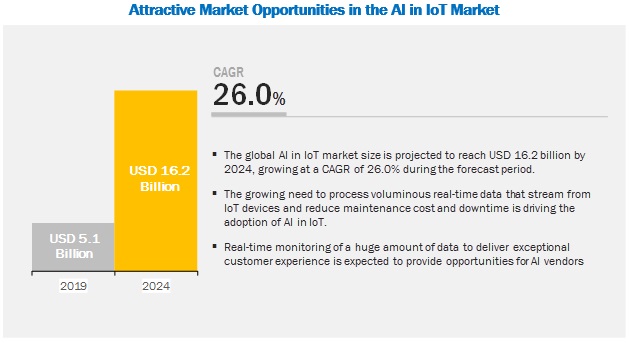
AIoT Market Report 2025-2030: Growth and Implementation
The AIoT market is projected to grow significantly, reaching over $81 billion by 2030. Growth is driven by the integration of AI-powered edge computing in smart infrastructure, smart grids, and industrial applications, enhancing both operational efficiency and sustainability.
Silicon Labs Announces Global Works With 2025 IoT Conference Series
The 2025 conference series highlights the convergence of AI at the edge, secure wireless innovations, and next-generation IoT platforms. The event focuses on how these technologies are reshaping smart homes, cities, and industrial sectors globally.
Qualcomm Technologies Inc. Acquires Edge Impulse to Enhance AI and IoT Capabilities
Qualcomm acquired Edge Impulse in 2025 to integrate advanced software platforms with its hardware. This strategic move aims to simplify the development and deployment of AI models directly onto edge devices, accelerating the growth of intelligent IoT solutions.
AIoT Trends 2025: The Future Of Intelligent Connectivity Reshaping Enterprise Operations
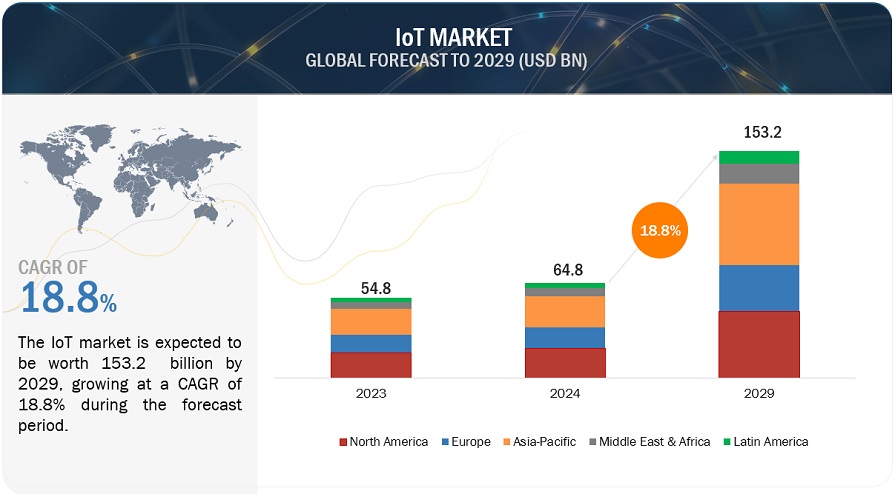
In 2025, edge computing has become a transformative force for IoT, with enterprise adoption projected to reach 50%. By processing data locally on connected hardware, organizations are overcoming latency issues and managing the massive data volumes generated by modern IoT devices.
IBM Delivers Autonomous Security Operations with Cutting-Edge Agentic AI
IBM introduced the Autonomous Threat Operations Machine (ATOM), utilizing agentic AI to automate threat hunting, investigation, and remediation, allowing security teams to focus on high-priority tasks.
Machine Learning for Cybersecurity: A Survey of Applications, Adversarial Challenges, and Future Research Directions
A comprehensive 2025 survey highlights the growing trend of adapting natural language processing (NLP) and transformer-based models to enhance malware detection, while addressing the critical need for trustworthy AI paradigms in cybersecurity.
News brief: AI security threats surge as governance lags
A mid-2025 report reveals that while AI adoption has reached 78% among organizations, concerns regarding AI data privacy have spiked significantly, highlighting a critical gap between rapid deployment and security governance.
CrowdStrike Delivers the Next Breakthrough in AI-Powered Agentic Cybersecurity with Charlotte AI Detection Triage
CrowdStrike launched Charlotte AI Detection Triage, an agentic AI tool that autonomously analyzes and prioritizes security detections with over 98% accuracy, effectively reducing the burden of false positives on analysts.